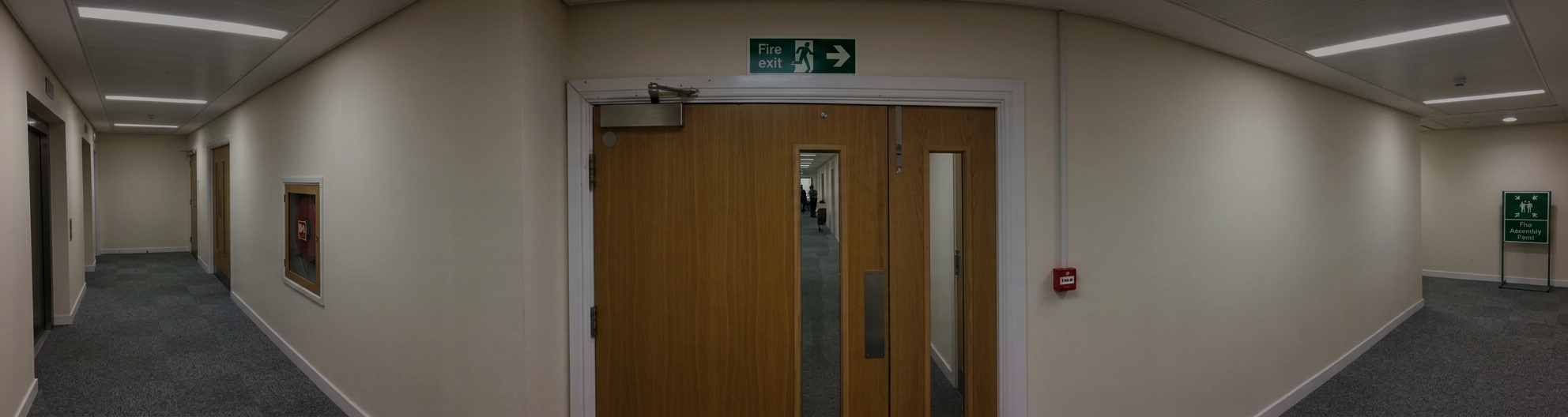
Fire Door Repairs vs. Replacement: The Costly Mistake Building Owners Make
By Anthony Walker FRICS FCIOB MIFireE
When fire door defects are identified, or a door has no visible certification markings or labels, it can be tempting to assume that wholesale replacement is the only option.
In some cases, replacement is absolutely necessary.
However, one of the most expensive mistakes a building owner can make is assuming that every defective or non-certified fire door automatically needs to be replaced.
The reality is often far more nuanced.
The Cost Challenge
Whether you manage a hospital, school, office portfolio or residential development, replacing large numbers of fire doors can represent a significant investment.
For many organisations, this creates a difficult balance between meeting fire safety obligations, managing risk and working within available budgets.
This is where independent, evidence-based advice can prove particularly valuable.

Understanding the Difference Between Defects and Failure
A common misconception is that the presence of a defect automatically means the entire doorset has failed and requires replacement.
That is not necessarily the case.
Depending on the condition of the doorset and the evidence available, certain defects may be capable of being addressed through targeted remediation rather than complete replacement.
Typical issues can include:
- Damaged or missing seals
- Faulty door closers
- Worn or defective ironmongery and leaking hinges
- Missing signage
- Incorrect gaps or alignment
- Defective or inappropriate hardware
Where a doorset remains suitable and remedial works can be appropriately justified, repair may provide a more proportionate and cost-effective solution.
When Replacement May Be Necessary
Landlords need to adopt a forward-thinking approach to risk management, ensuring that potential hazards are identified and addressed promptly. This involves regular updates to FRAs and swift action on identified risks to prevent minor issues from escalating into major safety concerns.
Significant Structural Damage
Where the door leaf, frame or other critical components have suffered extensive damage or deterioration, effective repair may no longer be viable.
Incompatible Modifications
Previous alterations, inappropriate hardware or repeated modifications may have compromised the integrity of the doorset to an extent that remediation cannot be adequately supported.
End of Serviceable Life
Some fire doors simply reach a point where the extent or frequency of repairs means continued remediation is no longer practical or cost-effective.
Taking an Evidence-Based Approach
Good fire door asset management is not about replacing the maximum number of doors.
It is about understanding their condition and making informed, proportionate decisions based on risk, evidence, compliance and value.
This requires:
- Detailed inspections
- Competent assessors
- Clear and auditable documentation
- Prioritised recommendations
- Clear justification for proposed remedial or replacement works
This evidence-led approach can help building owners direct investment where it is genuinely required, rather than defaulting to a blanket replacement programme.
The Value of Independent Advice
One of the challenges for building owners is determining which works are genuinely necessary and which represent the most appropriate response to an identified defect.
Independent fire door surveying provides an objective assessment focused on the condition of the doorset and the actions required, rather than the sale or installation of replacement products.
This can help organisations:
- Avoid unnecessary expenditure
- Prioritise available budgets
- Focus resources on higher-risk issues
- Build practical, phased remediation programmes
- Develop stronger information about their fire door assets
Beyond the Door Itself
Fire doors should not be considered in isolation.
Their performance forms part of a wider fire safety strategy that may also encompass:
- Compartmentation
- Means of escape
- Fire stopping
- Fire risk assessments
- Building management arrangements
Concentrating solely on door replacement can risk overlooking defects or weaknesses elsewhere within the building’s overall fire safety arrangements.
Making Better Decisions
The objective should never simply be to spend the most money or replace the most doors.
It should be to achieve safe, compliant and proportionate outcomes based on reliable evidence.
That means understanding the condition of your fire door estate, challenging assumptions and prioritising investment according to risk.
In practice, the answer is unlikely to be simply “repair everything” or “replace everything”. Some doors may require replacement, others may be suitable for targeted remediation, and the wider estate will benefit from a structured approach to inspection, prioritisation and ongoing management.
Before committing significant budget to a replacement programme, there is therefore one important question worth asking:
Do you know which fire doors genuinely need replacing and which could be effectively repaired?
Getting that decision right could prevent unnecessary expenditure while ensuring investment is directed towards the fire safety improvements that matter most.

By Anthony Walker
FRICS FCIOB MIFireE, Director at Sircle